ROCKY MATSON
Historical novels about endurance, legacy, and the quiet courage of ordinary people.
RECENT RELEASE
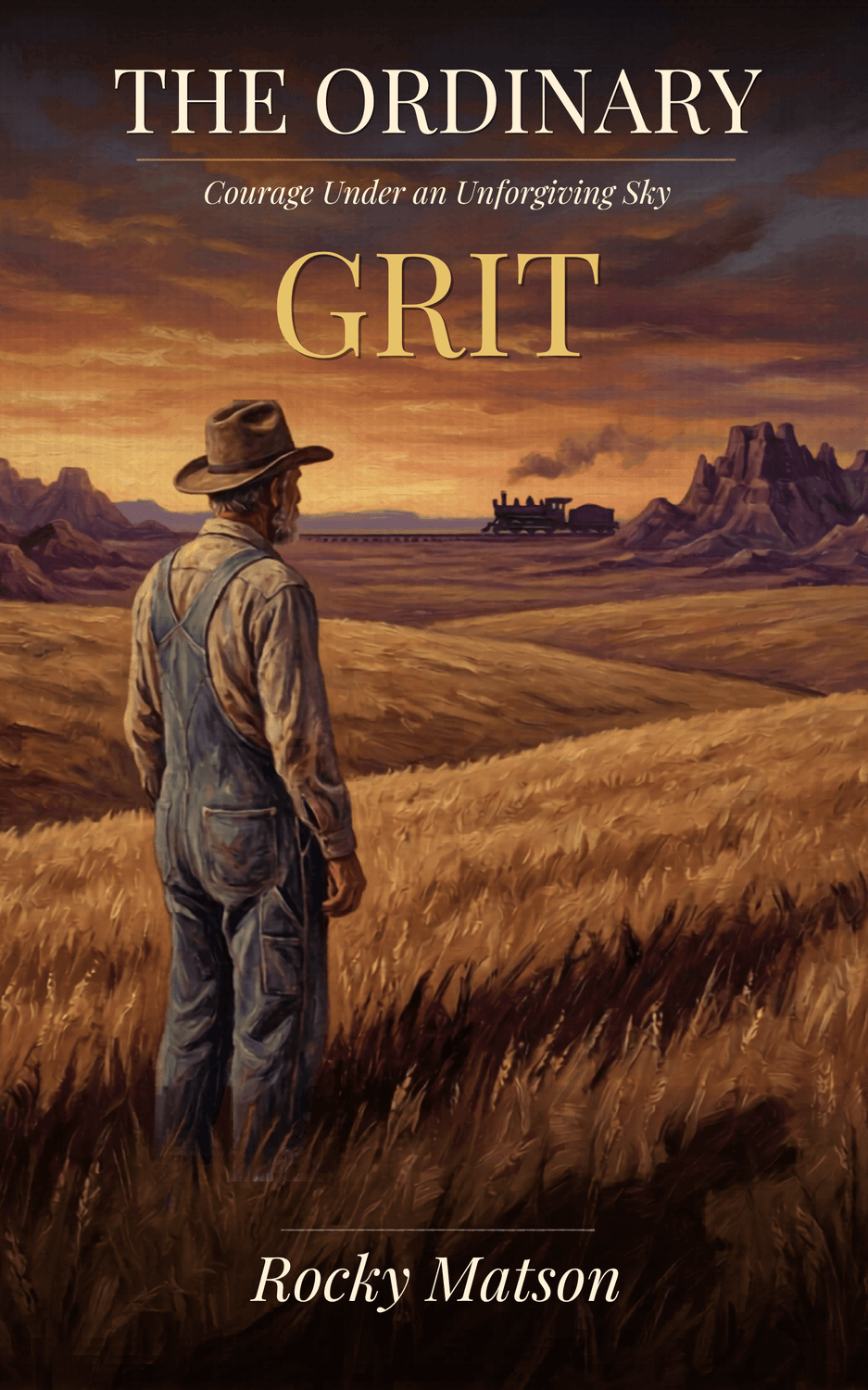
The Ordinary Grit: Courage Under and Unforgiving Sky
South Dakota, 1889. The well on Elias Thorne’s North Field has run dry, and the railroad’s land agent is already circling. As drought tightens its grip on the high plains, everything Elias has built stands one bad season away from being swallowed by dust and debt.
In the town of Oak Haven, four lives are about to be tested under an unforgiving sky: a stubborn farmer who has staked his future on land that may no longer sustain him, a taciturn blacksmith wrestling with scars he refuses to name, a Boston-bred schoolteacher learning how far from home courage can be found, and a wide-eyed young apprentice watching the adults around him choose between fear and resolve. When the rain stays locked beyond the horizon and the ledger says it is time to quit, each of them must decide what – and who – is worth holding on to.
The Ordinary Grit is a story about the kind of courage that does not announce itself. It is the courage that shows up before dawn, stays past dark, and keeps working when no one is watching. Through four unflinching voices, Rocky Matson paints a vivid portrait of a prairie town on the brink, where faith, loyalty, and stubborn hope are the only things standing between a community and the emptiness pressing in at its borders.
Inspired by the author’s own family history – a Norwegian great-grandmother who crossed an ocean alone at sixteen, a great-aunt who taught in a sod schoolhouse in Nebraska, and generations of farmers who turned the plains of Nebraska and Colorado into something worth passing down – this debut novel honors the ordinary men and women whose quiet grit shaped a landscape and a legacy.
COMING SOON!
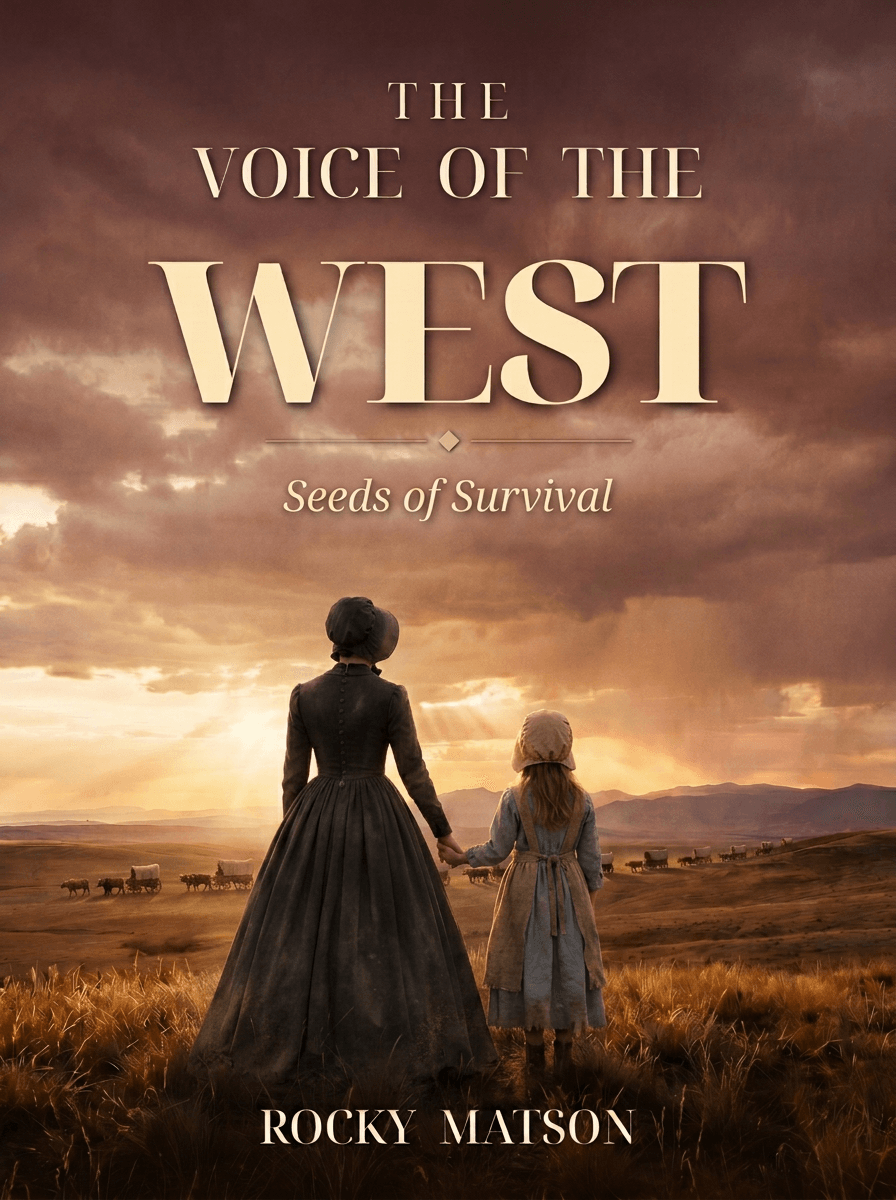
The Voice of the West
In the spring of 1847, Eleanor Briggs buries her husband and discovers his grand dreams were built on debt. The creditors take the house, the silver, and the last of her standing in Boston. What they leave behind is a map west, a leather journal, and a seven-year-old daughter who has stopped asking when her father is coming home.
Eleanor joins a wagon train bound for Oregon with ink-stained fingers and one conviction: the woman the auction house saw is not the woman who will step off the trail on the other side of the continent.
One hundred fifty years later, archivist Clara Hayes finds Eleanor's name pressed into the margin of a wagon-train manifest in darker, heavier ink — a last-minute addition, written in something that isn't iron gall. Her department chair calls Eleanor "a margin note." Clara recognizes the handwriting of a woman refusing to disappear.
The Voice of the West is a dual-timeline novel about inheritance, witness, and the women history almost lost.
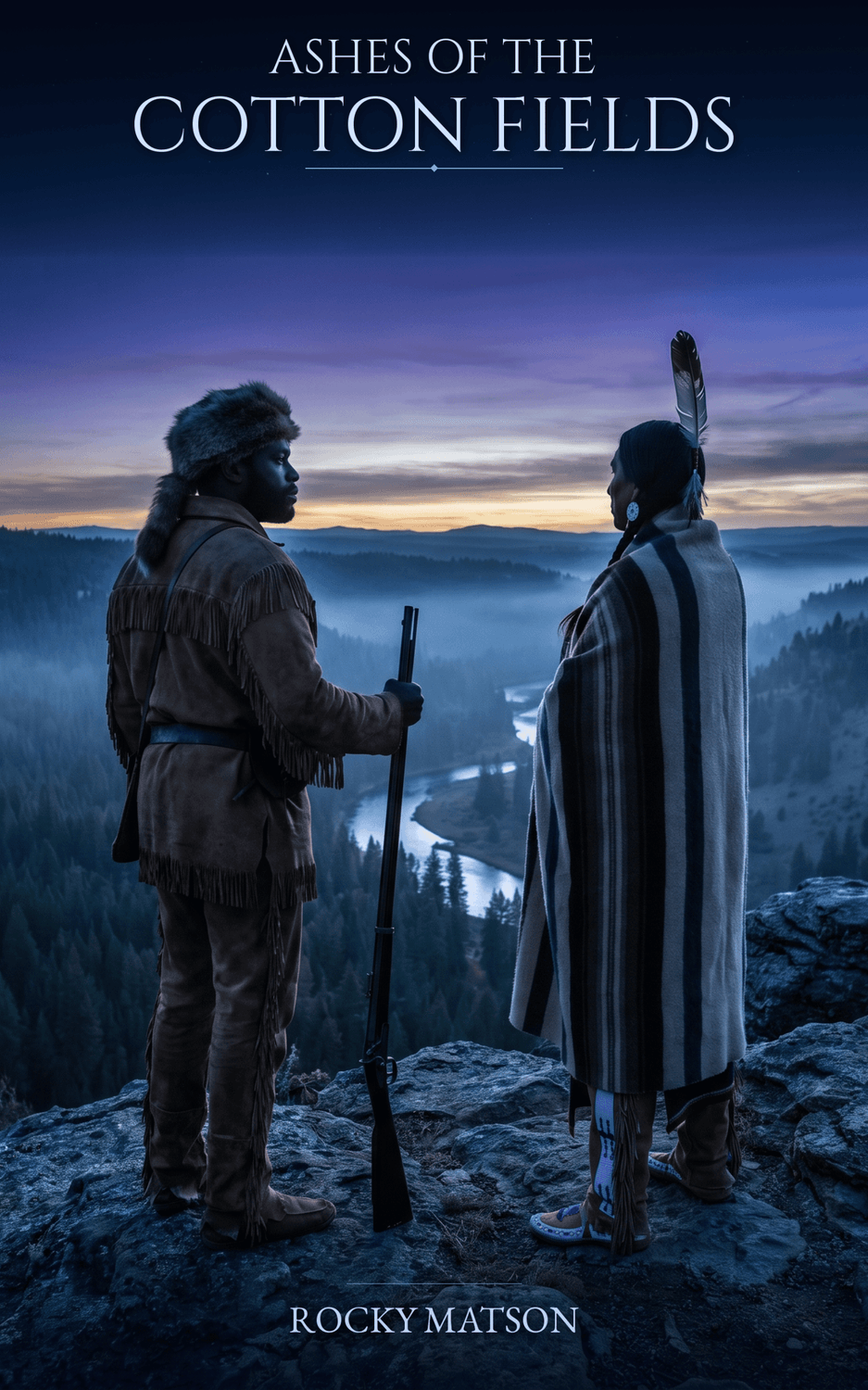
Ashes of the Cotton Fields
He was born into chains on a Mississippi cotton plantation, his name the property of another man. Then an old slave named Hemlock pressed a carved hickory compass into his palm and whispered one word: run.
What follows is a journey across a burning continent — through swamps alive with hounds, over Rocky Mountains that nearly swallow him whole, and into the arms of a Crow nation fighting its own war against the iron teeth of a westward railroad. Josiah learns to survive. He learns to fight. He learns what it means to be known by a people not his own.
But freedom is not the end of the story. It is only the beginning of the question.
Rooted in faith, forged in fire, and shot through with the grit of the American frontier, Ashes of the Cotton Fields is a story about what a man becomes when everything that defined him — chains, name, and all — finally turns to ash.
Where To Find My Books




Follow Me on Social






Get the latest book news
Be the first to hear about new releases, upcoming titles, reader extras, and special updates from Rocky Matson. About 1–2 emails a month. Unsubscribe anytime.
Your email address is safe with us .We never share your information with anyone

© 2026 Rocky Matson